The Riga National Zoo was established on 14 October 1912. Since then it has experienced a vareity of ups and downs, but most importantly the zoo has achieved a repsectable age, although not a record one, since the beginnings of the modern zoo can be traced to earlier centuries.
Ventspils a popular tourist centre in Latvia, offering recreation on a “Blue Flag” beach with excellent amenities and Ventspils Aqua Park. Children will enjoy the playgrounds at the Children’s Town. The facilities of Olympic Centre “Ventspils” welcome sports fans
Within the territory of the rehabilitation centre “Līgatne”, a well-equipped Soviet bunker is located 9 metres underground which was declassified only in 2003. It was constructed in the 1980s for the needs of the political and power elite – for governing the state in the case of a nuclear war.
If you wish to be carried away by history, Sigulda is the right place. Since the time when the tribes of Balts and Livs fought with the German crusaders, Sigulda has boasted of exciting legends and mighty castles, which are situated in the distance of a cannon shot from each other.
The Rundāle Palace is set amidst the fertile Zemgale Plains in the south of Latvia. The Rundāle Palace ensamble, one of the most outstanding monuments of Baroque and Rococo architecture in Latvia, was built between 1736 and 1740 as a summer residence for Ernst Johann Biron, Duke of Courland and a favourite of the Russian Empress Anna Ioannovna. The palace was designed by the Russian court architect Francesco Bartolomeo Rastrelli and built under his supervision.
St. Peter’s Church is one of the oldest and most valuable monuments of medieval architecture in the Baltic States. It is located in the historical centre of Riga and on 4 December 1997 was included among the UNESCO World Heritage sites.
Livu Aquapark is the biggest covered multi-functional water park in the Baltics and Eastern Europe with numerous attractions inside and an additional open-air area in summers (from June to the end of August) covering 6500 m². The Aquapark offers more than 40 different attractions, pools, saunas, bistros and bars.
The Naval Port is the northern part of Liepaja, which was used as a military fleet vase of the Russian Empire in the late 19th century. Tourists can live the part of a prisoner in the Naval Port Prison in a theatricalized performance and walk the underground labyrinths of the Northern Fort with torch lights.
At “Lāči” everything is for real. Their heart, soul and mind are in everything they do, and they make it all by themselves. Here one can get acquainted with ancient bread baking traditions! An extensive range of recreation programs is offered.
Jaunmokas palace combining Neo-Gothic shapes with elements of Art Nouveau is a special place among Latvian architectural masterpieces. It is situated in Tukums District, was designed by an architect, Wilhelm Bockslaff, and built in 1901 as a hunting palace for George Armitstead, a Mayor of Riga City.
The symbol of Daugavpils. An outstanding fortification that occupies more than 150 ha. The only early 19th century fortress in Eastern Europe that has remained virtually unchanged.
If you want to witness a film being shot outdoors and live the part of heroes of the days gone by, then the Cinevilla Movie Town in scenic Kurzeme is the place for you. Cinema and Weaponry Museum.
Cesis City history dates back to 800 years distant past. It relates to Cesis Medieval Castle around which in 13th century the city developed. Castle through the centuries has shared its fate with Cesis in fights against the Russian, Polish and Swedish armies.
The Cēsis Manor - House or Cēsis New Castle is a monument of great architectural importance and was built in the middle of the 18th century. After the recent restoration the castle has regained its initial appeal, but the Cēsis Museum of History and Art has a lot new to demonstrate its visitors.
Are you willing to fulfil a lifelong dream of all humankind – to soar like a bird in the air without any assistance? Go to “Aerodium” then! It is a vertical wind tunnel that allows you to soar in the air just like in a free fall, but you don’t need to jump with a parachute from an airplane in this case.
Old Riga is the historical and geographical centre of Riga on the right bank of the Daugava. Old Riga covers a relatively small inner area of the 13th-18th century fortifications where unique monuments of medieval architecture which, surprisingly, have survived two world wars are concentrated.

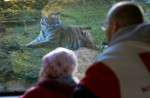 The Riga National Zoo was established on 14 October 1912. Since then it has experienced a vareity of ups and downs, but most importantly the zoo has achieved a repsectable age, although not a record one, since the beginnings of the modern zoo can be traced to earlier centuries.
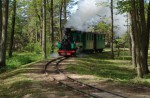 Ventspils a popular tourist centre in Latvia, offering recreation on a “Blue Flag” beach with excellent amenities and Ventspils Aqua Park. Children will enjoy the playgrounds at the Children’s Town. The facilities of Olympic Centre “Ventspils” welcome sports fans
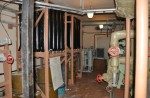 Within the territory of the rehabilitation centre “Līgatne”, a well-equipped Soviet bunker is located 9 metres underground which was declassified only in 2003. It was constructed in the 1980s for the needs of the political and power elite – for governing the state in the case of a nuclear war.
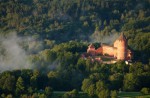 If you wish to be carried away by history, Sigulda is the right place. Since the time when the tribes of Balts and Livs fought with the German crusaders, Sigulda has boasted of exciting legends and mighty castles, which are situated in the distance of a cannon shot from each other.
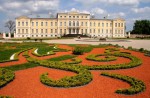 The Rundāle Palace is set amidst the fertile Zemgale Plains in the south of Latvia. The Rundāle Palace ensamble, one of the most outstanding monuments of Baroque and Rococo architecture in Latvia, was built between 1736 and 1740 as a summer residence for Ernst Johann Biron, Duke of Courland and a favourite of the Russian Empress Anna Ioannovna. The palace was designed by the Russian court architect Francesco Bartolomeo Rastrelli and built under his supervision.
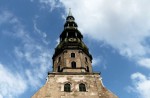 St. Peter’s Church is one of the oldest and most valuable monuments of medieval architecture in the Baltic States. It is located in the historical centre of Riga and on 4 December 1997 was included among the UNESCO World Heritage sites.
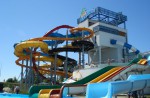 Livu Aquapark is the biggest covered multi-functional water park in the Baltics and Eastern Europe with numerous attractions inside and an additional open-air area in summers (from June to the end of August) covering 6500 m². The Aquapark offers more than 40 different attractions, pools, saunas, bistros and bars.
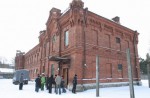 The Naval Port is the northern part of Liepaja, which was used as a military fleet vase of the Russian Empire in the late 19th century. Tourists can live the part of a prisoner in the Naval Port Prison in a theatricalized performance and walk the underground labyrinths of the Northern Fort with torch lights.
 At “Lāči” everything is for real. Their heart, soul and mind are in everything they do, and they make it all by themselves. Here one can get acquainted with ancient bread baking traditions! An extensive range of recreation programs is offered.
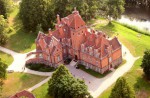 Jaunmokas palace combining Neo-Gothic shapes with elements of Art Nouveau is a special place among Latvian architectural masterpieces. It is situated in Tukums District, was designed by an architect, Wilhelm Bockslaff, and built in 1901 as a hunting palace for George Armitstead, a Mayor of Riga City.
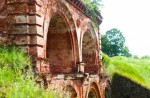 The symbol of Daugavpils. An outstanding fortification that occupies more than 150 ha. The only early 19th century fortress in Eastern Europe that has remained virtually unchanged.
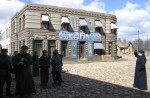 If you want to witness a film being shot outdoors and live the part of heroes of the days gone by, then the Cinevilla Movie Town in scenic Kurzeme is the place for you. Cinema and Weaponry Museum.
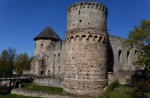 Cesis City history dates back to 800 years distant past. It relates to Cesis Medieval Castle around which in 13th century the city developed. Castle through the centuries has shared its fate with Cesis in fights against the Russian, Polish and Swedish armies.
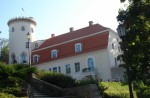 The Cēsis Manor - House or Cēsis New Castle is a monument of great architectural importance and was built in the middle of the 18th century. After the recent restoration the castle has regained its initial appeal, but the Cēsis Museum of History and Art has a lot new to demonstrate its visitors.
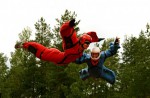 Are you willing to fulfil a lifelong dream of all humankind – to soar like a bird in the air without any assistance? Go to “Aerodium” then! It is a vertical wind tunnel that allows you to soar in the air just like in a free fall, but you don’t need to jump with a parachute from an airplane in this case.
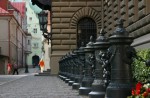 Old Riga is the historical and geographical centre of Riga on the right bank of the Daugava. Old Riga covers a relatively small inner area of the 13th-18th century fortifications where unique monuments of medieval architecture which, surprisingly, have survived two world wars are concentrated.
